Dedicate to Quality, Advance with Elegance
Shenzhen Guiya Trading Co., Ltd. derives its name from the spirit of “Gui Ya” —a commitment to returning to what matters most: uncompromising quality and integrity.
“Gui” (归) represents a return to the core—an unwavering pursuit of product excellence.
“Ya” (雅) embodies elegance and principle—a dedication to sincere, win-win cooperation with every partner.
Deeply rooted in cross-border trade, we build every step on the foundation of “Gui” —rigorously controlling quality down to the finest detail. Guided by “Ya,” we serve partners around the world with dedication, ensuring that every cross-border connection is handled with professionalism and efficiency.
Guiya Trading: Quality at Heart, Elegance to the World.
With sincerity as our bridge and quality as our foundation, we walk a long and prosperous path with partners across the globe.


When the Digit Proves Insufficient: The Emergence of Beauty Tools
In the early history of human cosmetic practice, the digit—specifically the fingertip—served as the principal instrument of application. Individuals would dip their fingertips into pigments to impart color to the complexion, employ charred implements to delineate the brows, and press tinted paper between the lips to achieve a stained effect. This primordial methodology persisted for millennia—until the dawn of the twentieth century, when a subtle yet consequential transformation commenced.
The period spanning the 1910s and 1920s witnessed the successive introduction of rotary lipsticks, eyebrow pencils, and mechanical eyelash curlers. This epoch marked a paradigmatic shift in cosmetic application: from mere coverage to intentional definition. The advent of such instruments was by no means coincidental. As aesthetic expectations evolved—demanding not merely the presence of color but the articulation of form, requiring brows to exhibit precise curvature and lashes to assume a natural arch—the inherent limitations of unassisted digital manipulation became manifest.
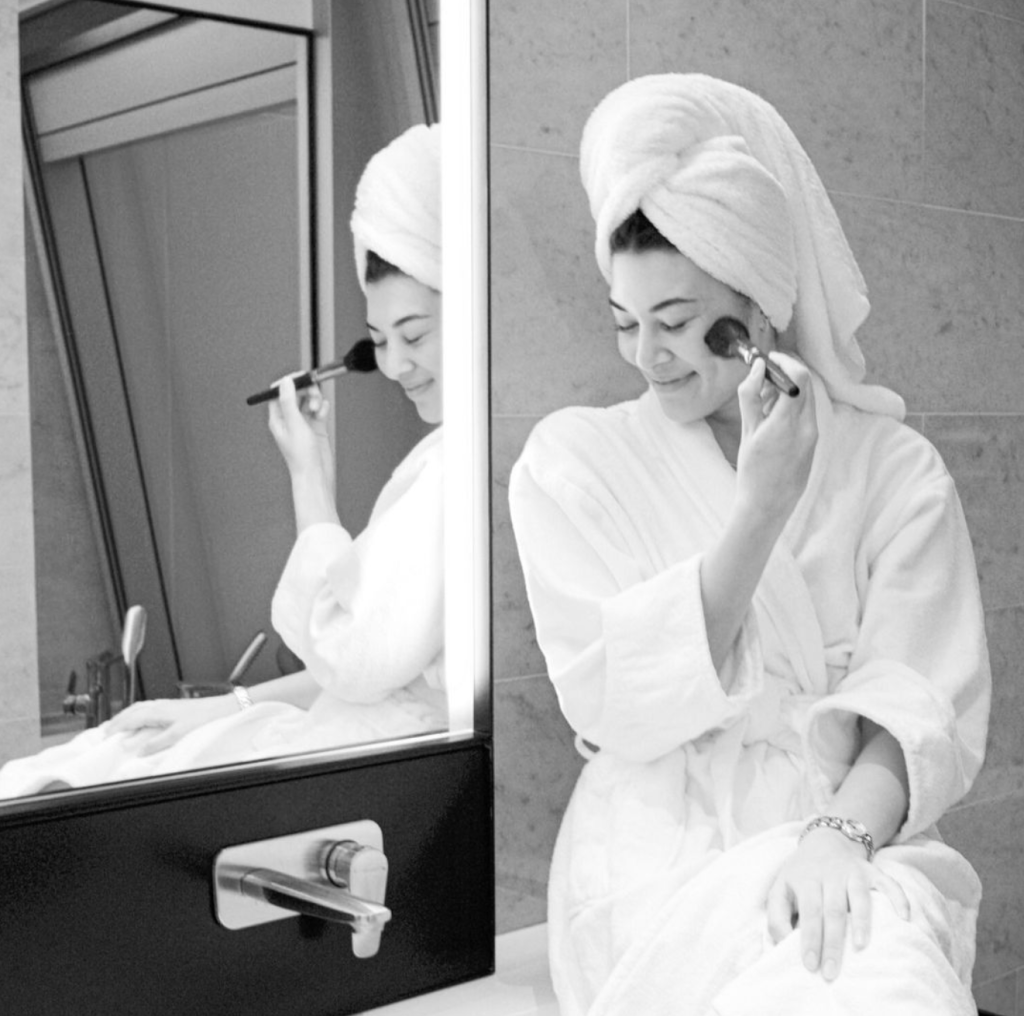
The very existence of beauty tools is predicated upon a foundational principle: the more exacting one’s pursuit of aesthetic refinement, the greater the necessity for implements that extend the functional capacity of the human hand. The eyeshadow brush reaches the subtle crease of the eyelid where the fingertip cannot traverse; the eyelash curler imparts a curvature that digital manipulation alone cannot achieve. Tools, in this context, constitute humanity’s first form of external augmentation—a deliberate extension devised to transcend the intrinsic constraints of corporeal capability.